
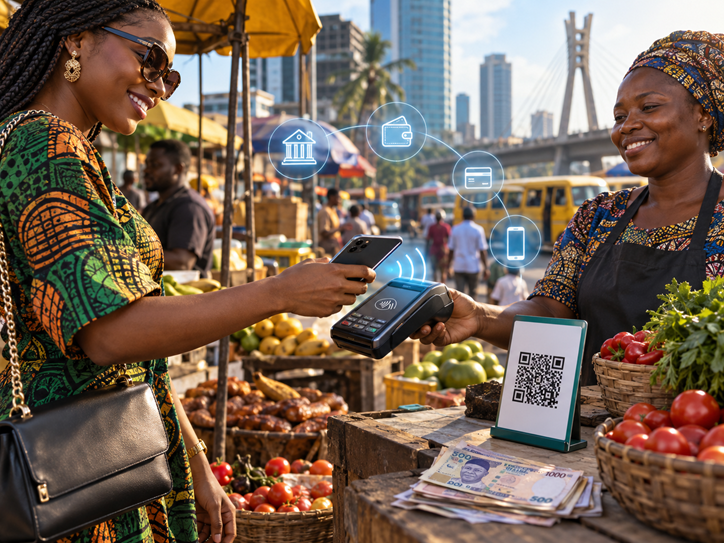
Nigeria’s payment system is changing rapidly.
A few years ago, many everyday transactions depended heavily on physical cash. Today, millions of Nigerians routinely use:
- Bank transfers
- Mobile banking apps
- Fintech wallets
- Point-of-Sale terminals
- USSD banking
- Debit cards
- QR payments
- Online payment gateways
- Contactless payments
The scale of this change is enormous.
In July 2026, the Nigeria Inter-Bank Settlement System reported that electronic payments processed over the preceding year had reached approximately ₦1.07 quadrillion, while transaction volumes through NIBSS Instant Payments reached 11.2 billion.
Nigeria is now moving into another stage of digital payments involving newer infrastructure, tighter fraud controls, improved PoS reliability, stronger interoperability and greater integration between banks and fintech platforms.
So what exactly is changing?
And what do ordinary users, traders, small businesses and companies need to know?
Let’s break it down.
1. Nigeria Is Building a New National Payment Infrastructure
One of the biggest developments in 2026 is the rollout of the National Payment Stack, or NPS.
NIBSS describes the NPS as a new sovereign digital-payment infrastructure designed to modernize Nigeria’s financial ecosystem and eventually succeed the legacy NIBSS Instant Payment platform.
The new infrastructure supports the international ISO 20022 messaging standard and is designed to combine payment processing, identity and data capabilities while also supporting future multi-currency and cross-border payment use cases.
By August 2026, NIBSS reported that the new platform had already processed approximately:
26.55 million transactions
worth:
₦1.4 trillion
across 48 participating institutions.
Why does this matter?
Most customers may never hear the words “National Payment Stack” when transferring money.
However, the technology operating behind the scenes can affect:
- Transfer speed
- Transaction reliability
- Fraud monitoring
- Interoperability between financial institutions
- Payment information available to banks
- Future cross-border payments
In other words, Nigeria is upgrading some of the infrastructure underneath the digital transactions people perform every day.

2. Instant Bank Transfers Are Becoming Even More Important
Nigeria already has one of the world’s highly developed instant account-transfer ecosystems.
NIBSS Instant Payments, commonly called NIP, allows participating institutions to send and receive account-based transfers in real time.
For many Nigerians, transferring money through a banking or fintech app has become as normal as handing someone cash.
You can now:
- Enter an account number.
- Confirm the recipient’s details.
- Enter an amount.
- Authorize the payment.
- Complete the transaction within seconds when systems are working normally.
The continued growth of this system explains why bank transfers have become extremely important for:
- Shops
- Restaurants
- Schools
- Churches
- Online businesses
- Freelancers
- Transport services
- Market traders
But greater adoption also means security and reliability become increasingly important.
3. Customers Now Have More Control Over Instant Transfers
The Central Bank of Nigeria announced additional instant-payment security requirements in March 2026.
Under the guidance, financial institutions are expected to give customers greater control over instant-transfer capabilities.
Among other requirements, customers can voluntarily disable instant transfers on their accounts for a chosen period, while institutions must support stronger authentication for enabling or disabling the functionality. Customers should also be able to request lower personal transaction limits where appropriate.
The rules took effect from July 1, 2026.
Why could this be useful?
Imagine someone who rarely makes large mobile transfers.
Instead of leaving an unnecessarily high transfer limit active every day, the customer could use more restrictive controls.
This can provide another layer of protection if:
- A phone is stolen
- Banking credentials are compromised
- A criminal gains temporary access to an account
The idea is simple:
Security should not depend only on a password.
4. Mobile Banking Is Getting Stronger Device Security
Another important 2026 change concerns mobile banking apps.
The CBN’s instant-payment guidance requires mobile banking applications to be linked to only one device at a time.
When a banking app is activated on a new device, a temporary ₦20,000 transaction limit applies during the first 24 hours under the new requirements.
This is designed to reduce the risk of criminals:
- Stealing login details
- Installing someone’s bank app on another phone
- Immediately transferring large sums
For customers, this makes phone security even more important.
Your smartphone is increasingly becoming part of your financial identity.
Protect it with:
- A strong PIN or password
- Fingerprint or face authentication
- SIM protection where available
- Updated software
5. PoS Payments Are Growing Rapidly
Point-of-Sale terminals have become a major part of everyday Nigerian commerce.
You can find them at:
- Markets
- Supermarkets
- Restaurants
- Fuel stations
- Pharmacies
- Hotels
- Schools
- Small neighbourhood shops
- Agent-banking locations
NIBSS reported that the value of PoS transactions reached about ₦18.78 trillion during the first quarter of 2026, up substantially from the corresponding period of the previous year.
That growth shows how important PoS payments have become.
But rapid growth creates another challenge:
How do regulators make millions of payment terminals safer and more reliable?
6. PoS Terminals Are Being More Closely Tracked
Nigeria has introduced stricter requirements around where PoS terminals operate.
The CBN directed payment operators to implement geographical identification and geo-tagging for terminals as part of efforts to improve oversight and reduce unauthorized or suspicious activity.
The 2025 revised agent-banking guidelines also require support for geo-fencing or geo-location of PoS terminals deployed to agents.
What does this mean?
A registered PoS terminal should increasingly be associated with a recognized operational location.
This can help regulators and payment companies identify unusual situations involving terminals operating somewhere they are not expected to be.
For legitimate businesses and agents, it means payment-terminal registration and compliance will become increasingly important.
7. PoS Networks Are Being Designed to Fail Less Often
Most Nigerians who regularly use PoS terminals have experienced something like:
“Network is down.”
or:
“Transaction failed.”
The CBN issued requirements for dual connectivity for PoS transactions to reduce dependence on a single processing route.
Under the policy, relevant providers must support connectivity through both NIBSS and Unified Payment Services Limited, allowing transactions to use alternative pathways during failures.
Implementation was required by mid-January 2026.
Why this matters to businesses
Imagine a restaurant where customers cannot pay because one payment network suddenly goes down.
Sales may stop.
Customers become frustrated.
Staff start requesting cash.
Redundant payment infrastructure helps reduce this risk.
For businesses, payment reliability is no longer merely an IT issue.
It directly affects revenue.
8. Nigeria Has a New Payments System Vision for 2028
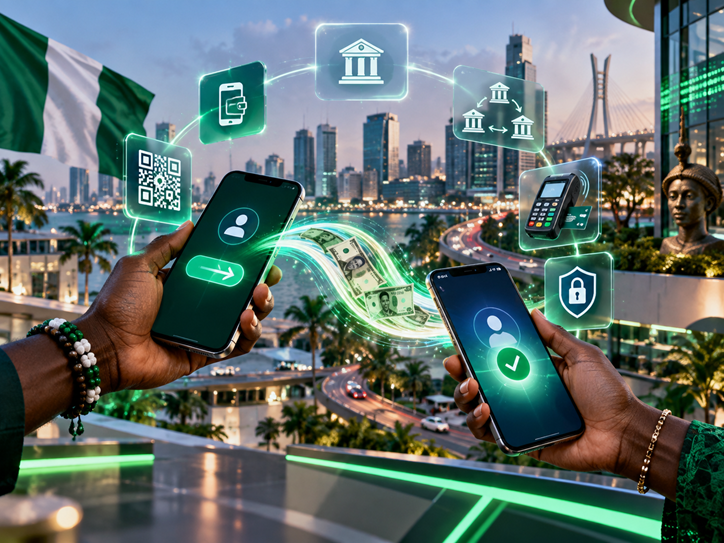
On June 1, 2026, the Central Bank officially launched Payments System Vision 2028, or PSV 2028.
The strategy is built around six major principles:
- Interoperability
- Security
- Inclusion
- Innovation
- Trust
- Collaboration
The CBN says the framework is intended to create a more secure, inclusive and interoperable payment ecosystem while improving integration with regional and global markets.
What does interoperability mean?
Imagine being able to move money easily between:
Bank A → Fintech B → Merchant C
without worrying about whether different systems can communicate properly.
That is part of the idea behind interoperability.
The goal is for different financial platforms to work together more effectively.
9. Cross-Border Payments Could Become More Important
Nigeria’s payments strategy is no longer focused only on transactions inside Nigeria.
PSV 2028 also prioritizes stronger regional and international integration.
The National Payment Stack has also been designed with multi-currency and future cross-border capabilities in mind.
This could eventually become particularly important for:
- Nigerian freelancers working internationally
- Importers
- Exporters
- African online businesses
- International merchants
- People receiving remittances
The long-term goal is increasingly about making digital money movement easier not only locally but across borders.
10. Open Banking Could Change Financial Apps
Another major development is Open Banking.
Open banking allows authorized financial services to share approved customer financial information through secure APIs after obtaining appropriate permission.
Nigeria already has operational guidelines governing open banking, including requirements around strong authentication, API security and customer authorization.
The CBN’s 2026 fintech report identifies expansion of open banking as one of the policy initiatives that could support Nigeria’s fintech development.
What could this mean in practice?
With proper permission, future financial apps could potentially help users see:
- Multiple bank accounts
- Spending patterns
- Savings
- Loans
- Business transactions
inside one authorized financial service.
This may create better:
- Budgeting tools
- Business accounting
- Credit assessment
- Payment applications
But it also makes data privacy and consent extremely important.
Never give a random financial app unrestricted access to your information simply because it promises convenience.
11. AI Is Entering Financial Services
Artificial intelligence is also becoming part of Nigeria’s financial technology ecosystem.
According to the CBN’s 2026 fintech report, AI is already being used in areas including fraud detection and credit scoring.
AI systems can potentially help financial institutions identify unusual behavior more quickly.
For example:
A customer normally transfers:
₦5,000
₦20,000
₦50,000
Then suddenly the account attempts multiple transfers worth millions from an unfamiliar device.
Automated fraud-monitoring systems may help flag unusual behaviour for investigation.
This does not eliminate fraud.
It gives financial institutions another tool for detecting it.
12. Cash Policies Are Also Encouraging Electronic Payments
Changes to Nigeria’s cash rules are another reason digital payments are becoming increasingly important.
From January 1, 2026, revised CBN policies removed cash-deposit limits but introduced tighter weekly cash-withdrawal limits.
Under the policy summarized by the CBN:
Individuals are generally limited to ₦500,000 weekly cash withdrawals, while corporate organizations have a ₦5 million weekly limit before excess-cash charges apply.
This does not mean cash is disappearing.
But policies like these increase the incentive for larger transactions to move through electronic channels.
What These Changes Mean for Ordinary Nigerians
For everyday users, the future of payments increasingly means:
Faster transactions
More payments happen instantly.
More digital options
Banks, fintechs, wallets, PoS and other payment tools continue expanding.
Better controls
Customers are gaining additional tools to protect transfer activity.
Greater dependence on smartphones
Your phone is becoming increasingly important to your financial life.
Greater need for cybersecurity awareness
More digital payments also create more opportunities for criminals to attempt fraud.
What Businesses Need to Know
For businesses, payment technology should now be treated as an important part of operations.
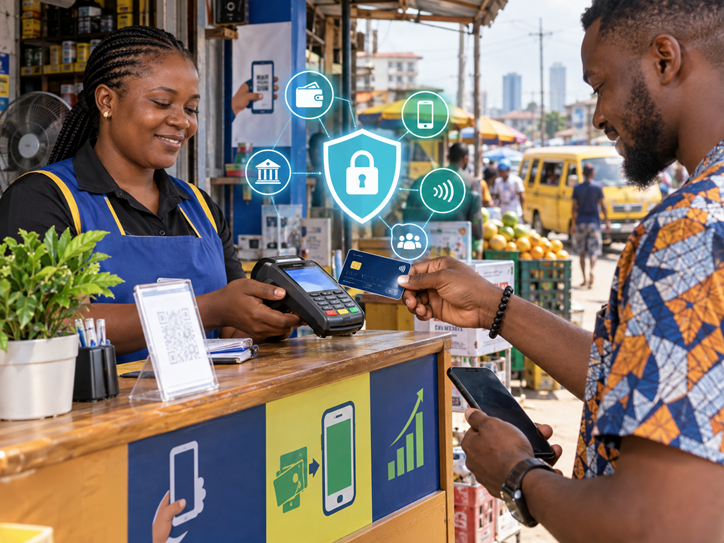
1. Offer More Than One Payment Method
Do not depend entirely on one channel.
Consider supporting:
- Bank transfer
- PoS
- Card payment
- Payment links
- Online checkout
where appropriate.
If one channel fails, another may still work.
2. Confirm Payments Yourself
Never depend solely on a customer’s screenshot.
Scammers can create:
- Fake alerts
- Edited screenshots
- Fake banking-app interfaces
Confirm payment through your own:
- Banking app
- Business dashboard
- SMS alert
- Transaction records
before releasing goods.
3. Separate Business and Personal Money
Businesses should consider using dedicated accounts for business transactions.
This makes:
- Accounting easier
- Reconciliation easier
- Fraud detection easier
- Record keeping cleaner
4. Keep Transaction Records
Digital payments generate useful records.
Use them.
Maintain records showing:
Date | Customer | Amount | Reference | Payment Channel | Status
Good records can help resolve disputes.
5. Train Employees
Your payment system is only as secure as the people using it.
Employees should know:
- Never to disclose OTPs
- How to identify fake transfer alerts
- How to confirm payments
- Who can authorize refunds
- How to report suspicious transactions
Digital Payments Also Create New Risks
Convenience does not mean zero risk.
As digital payments expand, users must watch for:
- Fake bank alerts
- Phishing links
- SIM-swap fraud
- Stolen banking credentials
- Fake loan apps
- Social engineering
- QR-code scams
- Account takeover
- Malicious applications
- Fake customer-care representatives
A scammer does not always need to “hack the bank.”
Sometimes they simply trick the customer.
Never Share Your OTP
One-Time Passwords are among the most important security credentials used for payments.
Never give your OTP to someone who calls saying:
“I am calling from your bank.”
“We need to upgrade your account.”
“Your BVN is about to expire.”
“Send the code so we can reverse your transaction.”
Your OTP is meant for you.
Treat it like the key to your money.
Be Careful With Banking Links
If you receive a message saying:
“Your bank account will be blocked. Click here.”
do not panic.
Instead of clicking the link:
Open your official banking app.
Visit the bank’s verified website.
Or contact the bank using an official number.
Scammers rely heavily on fear and urgency.
Protect Your Smartphone
Your phone now contains:
- Banking apps
- SMS codes
- Financial notifications
Losing control of the phone could create serious problems.
Use:
- Screen lock
- Fingerprint
- Face authentication
- Strong passwords
- Two-factor authentication
Also keep the device updated.

What Should You Do If a Transfer Fails?
Sometimes a transaction may:
- Debit your account
- Fail to reach the recipient
- Remain pending
Do not immediately repeat large transactions without checking what happened.
First:
- Check your transaction history.
- Confirm whether the recipient received the money.
- Keep the transaction reference.
- Contact your financial institution if necessary.
Keep screenshots and transaction references when resolving disputes.
The Future of Nigerian Digital Payments
Nigeria’s payment ecosystem is moving toward a system that is increasingly:
Digital
Real-time
Interoperable
Data-driven
Secure
Cross-border capable
Integrated with fintech
The Central Bank’s Payments System Vision 2028 explicitly prioritizes interoperability, security, financial inclusion and stronger integration with regional and international markets.
At the same time, NIBSS is rolling out infrastructure designed to support the next generation of digital payments.
The transformation will not happen without challenges.
Nigeria still has to address issues involving:
- Network reliability
- Cybercrime
- Consumer education
- Fraud
- Broadband access
- Digital identity
- Financial inclusion
- Compliance costs
The CBN’s own 2026 fintech research identifies infrastructure gaps, digital-identity access and data-sharing limitations as continuing barriers.
Quick Safety Checklist for Digital Payments
Before sending or receiving money:
Check the recipient’s name.
Confirm the account number.
Never disclose your PIN.
Never share your OTP.
Ignore suspicious payment links.
Confirm transfers through your own account.
Do not trust screenshots alone.
Use strong phone security.
Report suspicious transactions quickly.
Conclusion
Nigeria is entering a new stage of digital payments.
Instant transfers, fintech platforms, PoS terminals and mobile banking are already part of everyday life.
Now the underlying infrastructure is also changing.
Nigeria is rolling out the National Payment Stack, strengthening PoS infrastructure, expanding security requirements and pursuing a broader Payments System Vision 2028 focused on interoperability, inclusion, innovation and trust.
For consumers, this can mean more convenience and better security controls.
For businesses, it creates opportunities to accept payments more efficiently, automate records and serve customers digitally.
But convenience must be accompanied by awareness.
As money becomes more digital, cybersecurity becomes financial security.
At Cyberhub ICT, we believe understanding technology is the first step toward using it safely.
Pay digitally. Verify carefully. Protect your accounts. Stay informed.
About Cyberhub ICT
Cyberhub ICT Center provides ICT training and technology services including:
- Desktop Publishing
- Digital Marketing
- Web Design & Blogging
- Internet & Cyber Security
- Graphics Design
- Social Media Management
- Content Creation
- Forex Trading Training
For more practical technology, cybersecurity and digital-business guides, follow Cyberhub ICT.
Website: cyberhubict.online
Email: cyberhubict@gmail.com
Phone: 08061601662
Frequently Asked Questions
What is changing about digital payments in Nigeria in 2026?
Major developments include the rollout of the National Payment Stack, new instant-payment security requirements, stronger PoS infrastructure rules and the introduction of Payments System Vision 2028.
What is the National Payment Stack?
The National Payment Stack is a new NIBSS digital-payment infrastructure designed to modernize Nigeria’s financial ecosystem and eventually succeed the legacy NIP platform. It supports ISO 20022 and future multi-currency and cross-border capabilities.
Are PoS transactions still growing in Nigeria?
Yes. NIBSS reported that PoS transaction value reached about ₦18.78 trillion during the first quarter of 2026.
Can I reduce my bank-transfer limit?
Under CBN’s 2026 instant-payment guidance, institutions are expected to support customers who want lower personal transfer limits, subject to the applicable verification and risk requirements.
Is open banking available in Nigeria?
Nigeria has an operational regulatory framework for open banking, including authentication, authorization and API-security requirements.
Is a payment screenshot proof that money has arrived?
No. Always confirm the transaction through your own banking app, account statement or payment system before releasing goods or services.
Are digital payments replacing cash completely?
No. Cash continues to be used widely, but CBN policy and consumer behaviour are increasing the importance of electronic-payment channels.
