

Introduction
Artificial Intelligence is rapidly transforming the global workforce.
Tasks that once required large teams can now be automated using AI-powered systems, machine learning tools, and advanced robotics.
As AI continues evolving, many people are asking important questions:
- Will AI replace jobs?
- Which careers are safe?
- What skills will remain valuable?
- Which industries will grow in the future?
While some jobs may become automated, many careers are likely to remain highly valuable because they depend on creativity, emotional intelligence, critical thinking, human interaction, and advanced decision-making.
In this guide, we’ll explore the future of AI jobs, careers most affected by automation, and the safest career paths for the AI era in 2026 and beyond.
How AI Is Changing the Job Market
AI systems now assist with:
- Data analysis
- Customer support
- Content generation
- Image creation
- Video editing
- Automation
- Research
- Coding assistance
This increases efficiency but also changes how many industries operate.
Will AI Replace All Jobs?
No.
AI is more likely to transform jobs than completely eliminate human workers.
Many careers will evolve instead of disappearing entirely.
Jobs Most Vulnerable to Automation
| Career Type | Automation Risk |
|---|---|
| Repetitive data entry | High |
| Basic customer support | High |
| Simple bookkeeping | Medium-High |
| Routine manufacturing | High |
| Basic transcription | High |
Why?
Tasks that follow predictable patterns are easier for AI systems to automate.
Careers Likely to Remain Safe
Some professions are much harder to automate because they require uniquely human abilities.
1. Healthcare Professionals
Healthcare still relies heavily on human care and emotional intelligence.
Safer Careers
- Doctors
- Nurses
- Therapists
- Surgeons
- Caregivers
Why AI Won’t Fully Replace Them
Patients still need:
✅ Human empathy
✅ Trust
✅ Physical care
✅ Ethical decision-making
2. Cybersecurity Experts
As technology grows, cyber threats continue increasing.
Why This Career Is Safer
AI systems themselves require protection.
Cybersecurity professionals help defend:
- Networks
- Financial systems
- Businesses
- Government systems
Growing Demand
Cybersecurity remains one of the fastest-growing tech fields globally.
3. AI Specialists & Engineers
Ironically, AI creates new AI-related jobs.
In-Demand Roles
- Machine learning engineers
- AI researchers
- AI prompt engineers
- Robotics engineers
Useful Platforms
- OpenAI
- Microsoft
4. Skilled Trades
Hands-on physical work remains difficult to automate fully.
Safer Trade Careers
- Electricians
- Plumbers
- Technicians
- Mechanics
Why?
Real-world environments are unpredictable and require flexible human problem-solving.
5. Creative Professionals
AI can generate content, but original human creativity still matters greatly.
Safer Creative Careers
- Filmmakers
- Creative directors
- Brand strategists
- Storytellers
- Musicians
Important Note
AI may assist creative work, but human originality remains valuable.
6. Teachers & Educators
Education involves more than delivering information.
Why Human Teachers Matter
Students benefit from:
✅ Emotional support
✅ Mentorship
✅ Human communication
✅ Personalized teaching
7. Business & Leadership Roles
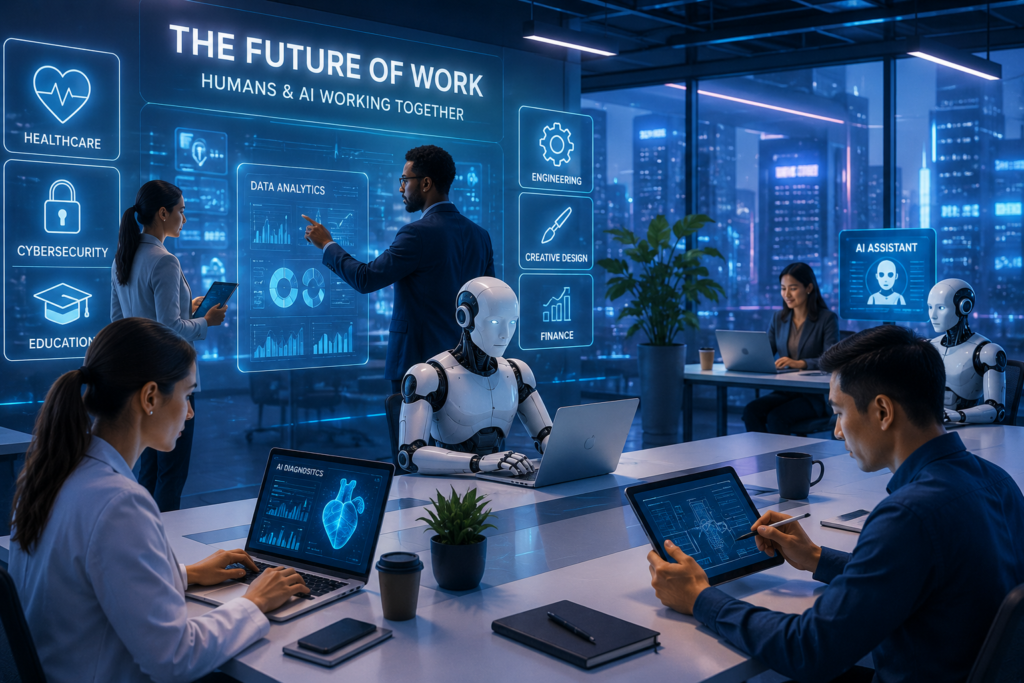
Leadership requires strategic thinking and human judgment.
Safer Careers
- Entrepreneurs
- Executives
- Managers
- Consultants
Why?
Leadership often involves:
- Ethics
- Negotiation
- Emotional intelligence
- Crisis management
8. Mental Health Professionals
Mental health support depends heavily on empathy and trust.
Important Roles
- Psychologists
- Therapists
- Counselors
Why AI Has Limits Here
Human emotional understanding remains extremely important.
9. Software Developers
Although AI assists coding, developers still remain highly valuable.
Why Developers Are Still Needed
Humans still guide:
- Software architecture
- Problem-solving
- Innovation
- System design
AI as a Tool, Not a Replacement
AI often increases developer productivity instead of eliminating developers entirely.
10. Digital Creators & Personal Brands
Human personalities remain difficult to replace.
Growing Opportunities
- YouTubers
- Influencers
- Educators
- Community builders
Why?
Audiences often connect more deeply with real people than automated systems.
Skills That Will Become More Valuable
Critical Thinking
People who solve complex problems will remain highly valuable.
Emotional Intelligence
Human interaction skills become increasingly important in automated industries.
Adaptability
Technology changes rapidly.
People who learn continuously will have advantages.
AI Literacy
Understanding how to use AI tools effectively will become essential.
Creativity
Original thinking remains difficult to automate fully.
Careers That May Change Significantly
Some jobs may not disappear completely but will change heavily due to AI assistance.
Examples
| Career | Likely Change |
|---|---|
| Content writing | AI-assisted workflows |
| Graphic design | Faster AI-supported design |
| Customer service | AI chatbot integration |
| Marketing | More AI automation |
| Accounting | Increased automation tools |
Frequently Asked Questions (FAQ)
Will AI replace programmers?
AI may automate repetitive coding tasks, but developers are still needed for complex problem-solving and innovation.
Which jobs are safest from AI?
Healthcare, cybersecurity, skilled trades, leadership, and mental health professions are among the safer careers.
Should students still study technology?
Yes. Technology-related careers remain highly valuable, especially AI-related fields.
Is AI creating new jobs too?
Absolutely. AI is creating entirely new industries and career opportunities.
What skill is most important for the AI future?
Adaptability and continuous learning are becoming extremely important.
Conclusion
Artificial Intelligence is changing the future of work rapidly, but not all careers face the same level of risk.
While repetitive and predictable jobs may become more automated, careers involving creativity, emotional intelligence, leadership, complex problem-solving, and human interaction are likely to remain highly valuable.
The future belongs not only to people who compete against AI, but to those who learn how to work alongside it effectively.
Instead of fearing AI completely, individuals who continuously learn, adapt, and improve their skills will likely find the greatest opportunities in the evolving digital economy.
Order Links:
- How to Use AI to Make Money Online
- AI Side Hustles Beginners Can Start Today
- Best Remote Jobs for Beginners
- How to Build a Remote Career Without a Degree
