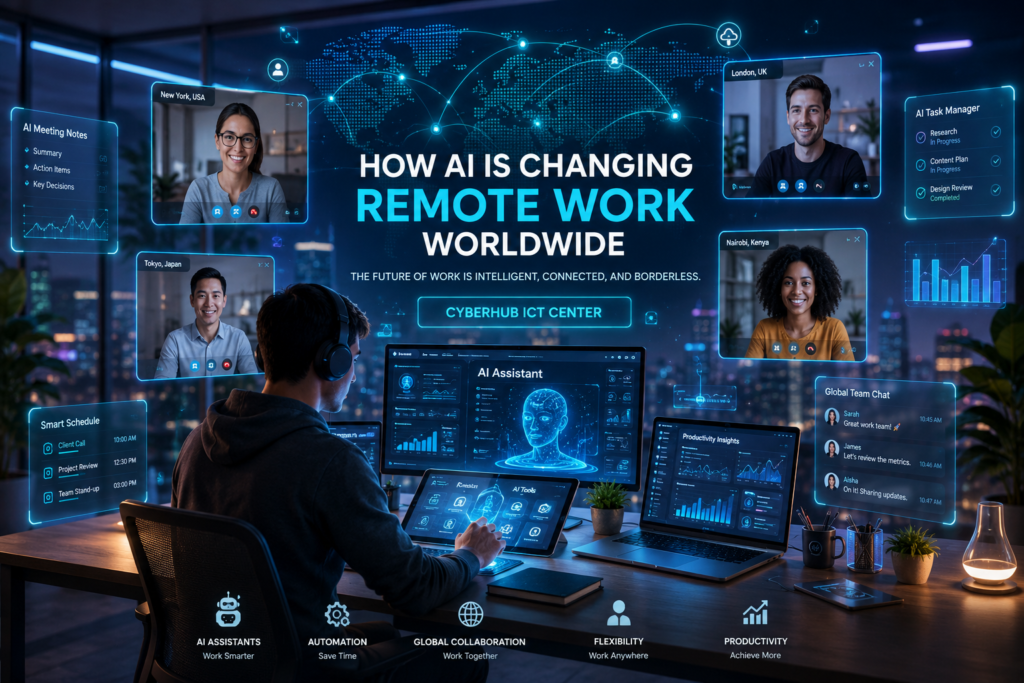
Artificial Intelligence is no longer just a futuristic concept discussed in tech conferences. Today, AI is actively transforming how millions of people work remotely across the globe. From smart virtual assistants and automated scheduling tools to AI-powered communication systems and productivity software, remote work is evolving faster than ever.
Businesses now rely on AI to improve efficiency, reduce repetitive tasks, enhance collaboration, and create better remote working experiences for employees and freelancers alike.
As companies continue embracing hybrid and fully remote work models, understanding the role of AI has become essential for professionals, entrepreneurs, students, and digital workers.
Introduction
Remote work has grown rapidly over the past few years, but Artificial Intelligence is now taking it to an entirely new level. AI tools are helping companies automate workflows, improve communication, organize projects, and even assist workers with daily tasks.
Whether you are a freelancer, content creator, digital marketer, software developer, virtual assistant, or online entrepreneur, AI technologies are becoming an important part of modern remote work.
From AI-powered meeting assistants to intelligent project management systems, remote workers now have access to tools that can increase productivity and save valuable time.
In this article, we’ll explore how AI is changing remote work worldwide, the benefits and challenges involved, and the future opportunities AI may create in the global workforce.
1. AI Is Automating Repetitive Tasks
One of the biggest impacts of AI on remote work is automation.
Many repetitive tasks that once consumed hours can now be handled within minutes using AI-powered tools.
Examples include:
- Email sorting and responses
- Data entry
- Scheduling meetings
- Customer support chatbots
- Social media posting
- Content generation
- File organization
- Transcription services
Remote workers can now focus more on creative and strategic work instead of spending too much time on repetitive activities.
Popular AI automation tools include:
- ChatGPT
- Grammarly
- Notion AI
- Zapier AI
- Google Gemini
- Microsoft Copilot
2. AI Is Improving Communication in Remote Teams
Communication is one of the most important aspects of remote work.
AI tools are helping global teams communicate more efficiently through:
- Real-time translations
- Meeting summaries
- Voice transcription
- AI-generated notes
- Smart email suggestions
- Automated follow-ups
Platforms like Zoom and Microsoft Teams now integrate AI features that can summarize meetings automatically and highlight key action points.
This is especially helpful for international teams working across different time zones.
Benefits of AI Communication Tools
- Reduced misunderstandings
- Faster collaboration
- Better documentation
- Improved productivity
- Easier multilingual communication
3. AI Is Enhancing Productivity
Remote workers often struggle with distractions, poor organization, and time management.
AI productivity tools help workers stay organized by:
- Prioritizing tasks
- Setting reminders
- Tracking work progress
- Managing schedules
- Recommending workflow improvements
AI assistants can even analyze working patterns and suggest ways to improve efficiency.
For example, some tools can recommend the best times for focused work, meetings, or breaks based on user behavior.
Productivity Tools Powered by AI
- Trello AI
- ClickUp AI
- Notion AI
- Motion
- RescueTime
- Slack AI
4. AI Is Creating New Remote Job Opportunities
While many people fear AI may replace jobs, it is also creating entirely new remote career opportunities.
Today, companies are hiring professionals for roles such as:
- AI content editors
- Prompt engineers
- AI automation specialists
- Data analysts
- Machine learning assistants
- AI chatbot trainers
- Virtual AI consultants
- Remote AI support specialists
Freelancers who understand AI tools now have a competitive advantage in the digital economy.
This shift is encouraging more people worldwide to learn digital skills and participate in remote work opportunities.
5. AI Is Changing Customer Support Services
Customer service has changed significantly due to AI.
Businesses now use AI chatbots and virtual assistants to:
- Handle customer inquiries
- Provide instant responses
- Process simple requests
- Reduce response times
- Improve customer experience
This allows remote customer support teams to focus on more complex problems while AI handles routine interactions.
Common AI Customer Service Technologies
- Chatbots
- Voice assistants
- Automated ticket systems
- AI response generators
- Sentiment analysis tools
6. AI Is Supporting Remote Learning and Training
Companies with remote teams often struggle with onboarding and training employees.
AI-powered learning systems now provide:
- Personalized training
- Interactive tutorials
- Automated assessments
- Skill recommendations
- Smart learning paths
Employees can learn at their own pace while companies monitor progress more effectively.
AI also helps students and self-learners access digital education from anywhere in the world.
7. AI Is Helping Freelancers and Entrepreneurs
Freelancers are among the biggest beneficiaries of AI tools.
AI helps freelancers:
- Generate content faster
- Design graphics
- Edit videos
- Build websites
- Research markets
- Analyze trends
- Manage clients
Entrepreneurs can also automate many aspects of online business operations.
This allows small businesses to compete more effectively without hiring large teams.
Areas Where Freelancers Use AI
| Skill Area | How AI Helps |
|---|---|
| Content Writing | Faster drafting and editing |
| Graphic Design | AI image generation |
| Video Editing | Automated subtitles and effects |
| Programming | AI coding assistants |
| Marketing | Smart campaign optimization |
| SEO | Keyword research and optimization |
8. Challenges of AI in Remote Work
Despite its advantages, AI also brings several challenges.
Common Concerns
1. Job Displacement
Some repetitive jobs may become automated.
2. Privacy Issues
AI systems often process large amounts of personal and company data.
3. Overdependence on Technology
Workers may become too reliant on AI systems.
4. Skill Gaps
Professionals who fail to adapt may struggle in the evolving digital workplace.
5. AI Errors
AI tools can still make mistakes and sometimes generate inaccurate information.
Because of this, human oversight remains extremely important.
9. The Future of AI and Remote Work
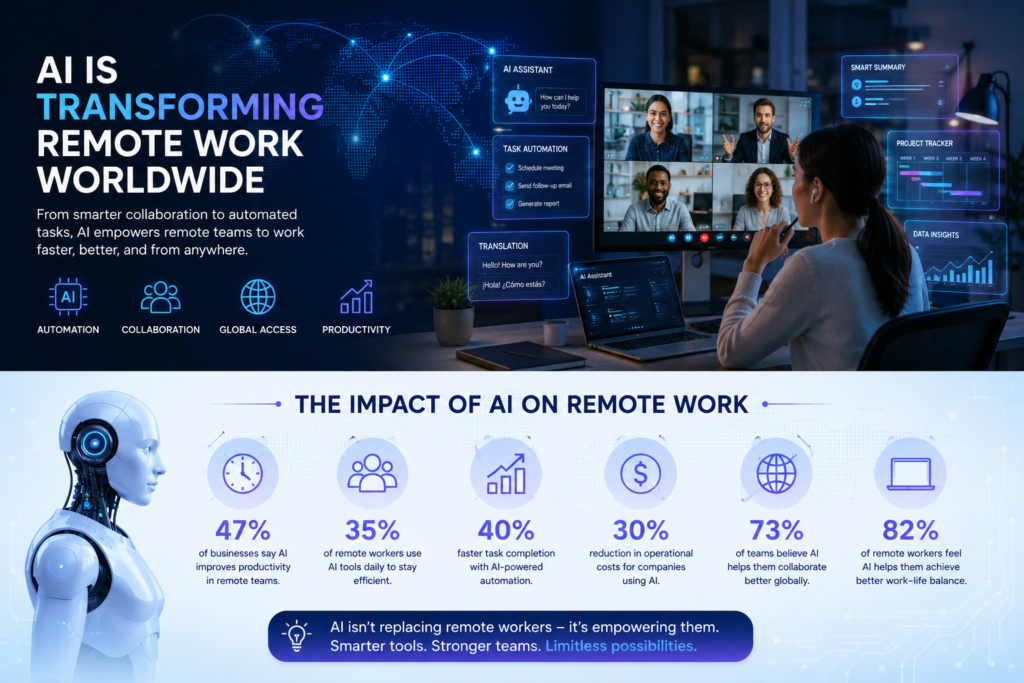
The future of remote work will likely involve even deeper AI integration.
Possible future developments include:
- AI-powered virtual offices
- Smarter digital assistants
- Advanced virtual collaboration spaces
- AI project managers
- Real-time multilingual communication
- Personalized AI work companions
As AI technology improves, remote workers who adapt early may gain significant advantages in productivity and career growth.
Businesses are also expected to continue investing heavily in AI-driven remote work systems.
Why Learning AI Skills Matters Today
Understanding AI is becoming increasingly valuable for students, workers, entrepreneurs, and freelancers.
Learning how to use AI responsibly can help individuals:
- Increase productivity
- Improve employability
- Build online businesses
- Access remote opportunities
- Stay competitive in modern workplaces
Digital skills combined with AI knowledge may become one of the strongest career advantages in the coming years.
Conclusion
Artificial Intelligence is rapidly transforming remote work worldwide. From automation and productivity enhancement to communication and digital collaboration, AI tools are reshaping how people work online.
Although AI presents some challenges, it also creates exciting opportunities for professionals willing to learn and adapt.
Remote workers who embrace AI technologies can potentially work smarter, save time, and access new global opportunities.
The future of work is becoming increasingly digital, flexible, and AI-powered.
Staying informed and continuously improving digital skills will be essential for success in this evolving world.
Frequently Asked Questions (FAQ)
What is AI in remote work?
AI in remote work refers to the use of artificial intelligence tools and systems to improve communication, productivity, automation, and collaboration for people working online.
Can AI replace remote workers?
AI may automate some repetitive tasks, but many jobs still require human creativity, decision-making, and problem-solving.
Which AI tools are useful for remote workers?
Popular tools include ChatGPT, Grammarly, Notion AI, Zoom AI, Microsoft Copilot, and Slack AI.
Is AI creating new jobs?
Yes. AI is creating new opportunities in areas such as AI automation, prompt engineering, digital marketing, content editing, and data analysis.
How can beginners learn AI skills?
Beginners can start by learning digital skills, AI tools, basic programming, automation, and productivity software.
Internal Linking Opportunities
- Beginner’s Guide to Artificial Intelligence
- Best Digital Skills to Learn in 2026
- How to Start Freelancing Online
- Top Productivity Tools for Remote Workers
- How AI Is Transforming Small Businesses
Suggested CTA Section
Ready to Learn More Digital Skills?
Explore more tech guides, AI tutorials, and digital opportunities on Cyberhub ICT Center.
