
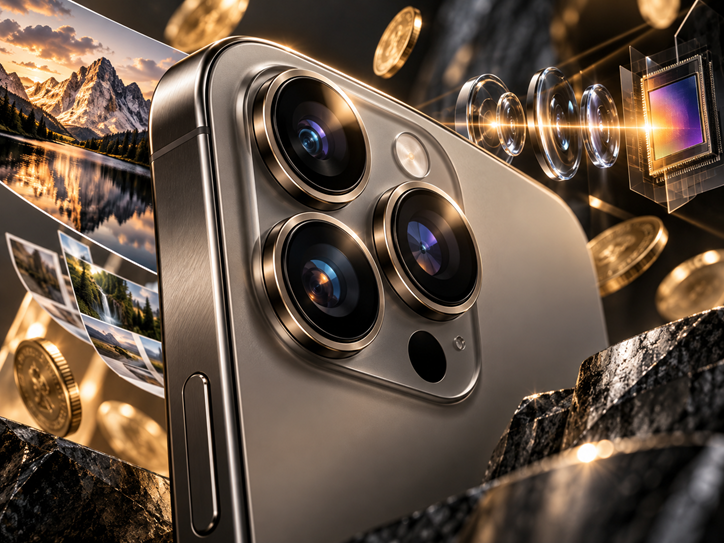
If you have checked the price of smartphones recently, you may have noticed something troubling:
Phones are getting more expensive.
Many people remember when a decent smartphone could be purchased at a much lower price. Today, even mid-range phones often cost far more than older flagship devices once did. Premium smartphones have become especially expensive, sometimes reaching prices that make buyers pause before upgrading.
So, what is happening?
Is it just inflation?
Are companies simply trying to make more profit?
Or is there real technology inside modern phones that explains the rising prices?
The truth is that smartphone prices are increasing for several reasons, and a major part of the story is the increasingly advanced technology built into today’s devices.
In this article, Cyberhub ICT explains why smartphone prices are increasing and what technology is driving those higher costs.
Smartphones Are No Longer “Just Phones”
Years ago, mobile phones were mainly for:
- Calling
- Sending text messages
- Playing simple games
- Storing contacts
- Taking very basic pictures
Today, smartphones have become powerful pocket computers.
A modern smartphone can be used for:
- Professional photography
- Video recording
- Video editing
- Gaming
- Online learning
- Remote work
- Mobile banking
- Navigation
- Social media
- Business communication
- Artificial intelligence features
- Health and fitness tracking
In many cases, one smartphone is replacing multiple devices.
That means manufacturers are adding more sophisticated hardware and software, and all of that affects price.
1. Smartphone Processors Have Become Much More Powerful
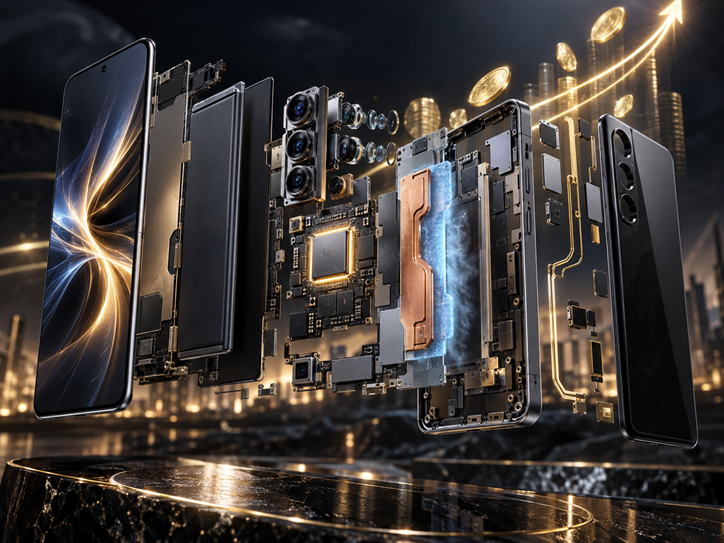
At the center of every smartphone is the processor or chipset.
This is the component responsible for running apps, managing tasks, handling graphics, supporting AI features and controlling many of the phone’s core functions.
Modern chips are far more advanced than older ones.
Today’s smartphone processors are expected to handle:
- Multitasking
- High-end gaming
- 4K or even 8K video recording
- AI image processing
- Voice recognition
- Faster app performance
- Better battery efficiency
- Advanced security features
These chips are built using highly sophisticated semiconductor manufacturing processes.
Designing and producing them is extremely expensive.
As phones become more powerful, the cost of these processors also rises.
Why this matters
A more advanced chip is one reason newer phones feel faster and smarter.
But it also contributes to the higher selling price.
2. AI Features Are Raising Hardware Demands
Artificial intelligence is now one of the biggest trends in smartphones.
Manufacturers increasingly promote features such as:
- AI photo enhancement
- AI-powered translation
- Smart search
- Voice assistants
- Writing assistance
- Call summaries
- Image editing
- Object recognition
- Live captions
- Productivity suggestions
These features are not free to build into a phone.
AI requires:
- More powerful chips
- Dedicated AI processing units
- Better memory
- Improved software development
- More research and testing
Phones are no longer being designed only for calling, texting and browsing.
They are increasingly being designed to serve as personal AI assistants.
That level of capability adds to production costs.
3. Camera Systems Are Becoming More Expensive
Many people now choose smartphones based heavily on the camera.
Manufacturers know this, so they compete aggressively in this area.
A modern smartphone camera setup may include:
- Main camera
- Ultrawide camera
- Telephoto camera
- Macro camera
- Depth sensor
- Front selfie camera
- Advanced image stabilization
- Large image sensors
- Night photography systems
Some devices also support:
- Optical zoom
- Periscope lenses
- Cinematic video modes
- Advanced portrait modes
- AI-assisted image processing
These camera systems are far more sophisticated than what older phones used.
In many cases, the phone is not just using one camera.
It is using a complete imaging system with multiple sensors, lenses, stabilization components and software processing tools.
All of this increases development and manufacturing costs.
4. Display Technology Has Improved Significantly
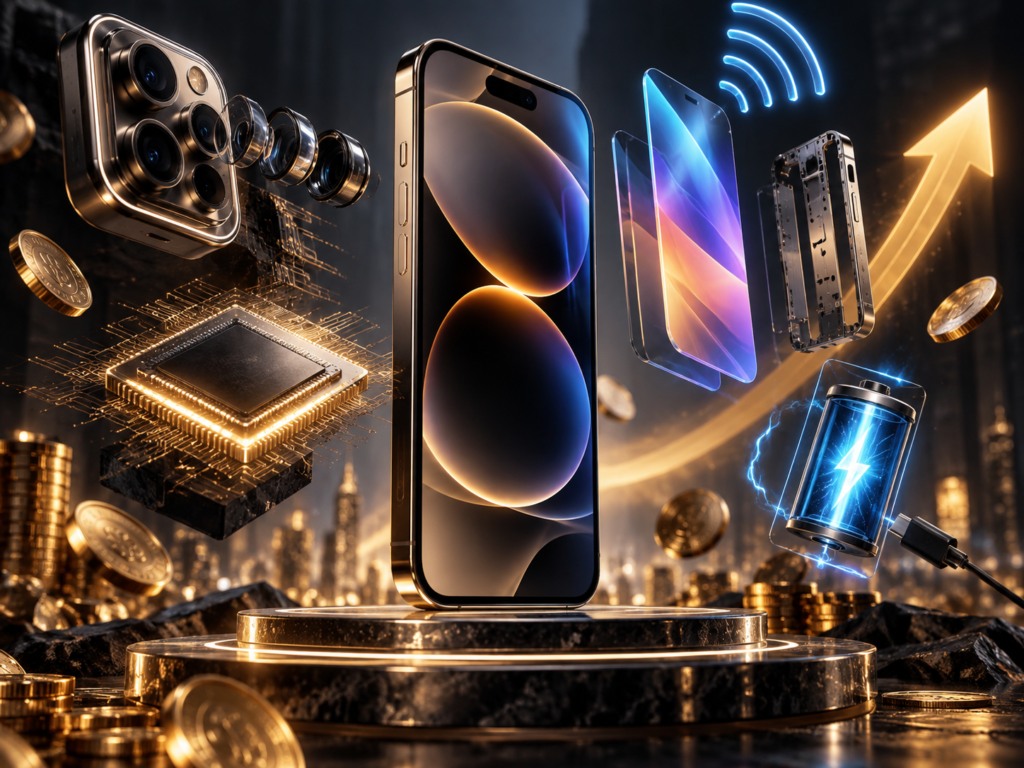
The screen is one of the most expensive parts of a smartphone.
Older phones commonly had simpler LCD displays.
Today, many phones use more advanced display technology such as:
- OLED
- AMOLED
- LTPO displays
- Higher refresh rates like 90Hz, 120Hz or more
- Better brightness levels
- Improved color accuracy
- Stronger glass protection
- Thinner bezels
Higher refresh-rate screens make scrolling and animations smoother.
Brighter screens improve visibility outdoors.
Better display panels make videos, gaming and general use more enjoyable.
But superior display quality also adds to the price.
Foldable phones take this even further, since flexible display technology is especially expensive.
5. 5G and Modern Connectivity Cost More
Modern phones are expected to support fast connectivity.
That includes:
- 4G
- 5G
- Wi-Fi improvements
- Bluetooth improvements
- GPS enhancements
- NFC
- Better signal management
5G support in particular adds cost because phones need:
- More advanced modems
- Better antenna systems
- Improved heat management
- Complex engineering
Consumers may simply see “5G” on the box, but behind that small label is a lot of engineering work.
6. Better Battery Technology and Faster Charging Add Cost
People want long battery life, but they also want thin and attractive phones.
This creates a challenge for manufacturers.
They must balance:
- Battery capacity
- Charging speed
- Safety
- Device thickness
- Heat control
- Battery lifespan
Many phones now support:
- Fast charging
- Wireless charging
- Reverse wireless charging
- Battery health management
- Smarter power optimization
These charging systems require more advanced components and safety engineering.
Even though buyers may see charging as a basic feature, manufacturers invest heavily to make charging:
- Faster
- Safer
- More efficient
This also contributes to higher prices.
7. Storage and RAM Are Increasing
Apps today are larger than before.
Photos and videos are larger.
Games are heavier.
AI features consume more resources.
Because of this, modern smartphones often come with:
- More RAM
- Larger internal storage
- Faster storage technology
A phone with 256GB or 512GB storage and 8GB or 12GB RAM naturally costs more than older devices with smaller memory and slower storage.
Consumers increasingly demand smooth performance, and that means manufacturers must include stronger hardware.
8. Premium Materials and Build Quality Raise Costs
Some modern smartphones use more premium materials than earlier devices.
Instead of cheaper plastic, many phones now use:
- Glass backs
- Metal frames
- Stronger aluminum
- Titanium or high-end alloys
- Better water resistance
- Improved dust resistance
These materials can make phones:
- More attractive
- More durable
- More premium-feeling
However, they also raise production costs.
Even packaging, internal design and precision manufacturing add to the final price.
9. Research and Development Is Expensive
When you buy a modern smartphone, you are not paying only for the physical parts.
You are also paying for the years of:
- Research
- Design
- Testing
- Software development
- Camera tuning
- Chip optimization
- Thermal engineering
- Durability testing
- Security development
- AI feature development
Before a phone reaches the market, manufacturers may spend huge amounts refining it.
They test:
- Performance
- Battery life
- Heat control
- Camera quality
- Drop resistance
- Water resistance
- Connectivity
- Software stability
All of this research and development cost is eventually reflected in the selling price.
10. Software Support Is Becoming More Important
Modern users expect more than hardware.
They also expect:
- Security updates
- Android updates
- Bug fixes
- Feature updates
- Better privacy controls
- Long-term support
Providing software support for several years is not cheap.
A company must maintain engineers, security teams and update infrastructure.
This is one reason why well-supported devices can be more expensive.
In simple terms, the phone is not just being sold once.
The company may continue working on it for years after purchase.
11. Import Costs, Exchange Rates and Logistics Also Matter
Technology is not the only reason prices are increasing.
Economic factors also play a major role, especially in countries that rely heavily on imported devices.
These factors may include:
- Currency exchange rates
- Shipping costs
- Customs duties
- Import charges
- Retail overhead
- Distribution costs
- Inflation
For buyers in Nigeria and similar markets, exchange-rate changes can have a significant effect on smartphone pricing.
Even if the international price remains similar, the local market price may rise because importing the phone becomes more expensive.
So while technology increases the manufacturing cost, local economic conditions may increase the final retail price even further.

12. Foldables and New Form Factors Push Prices Higher
The smartphone market is no longer limited to the traditional slab-shaped phone.
Manufacturers are experimenting with:
- Foldable phones
- Flip phones
- Dual-screen concepts
- Ultra-thin premium designs
These devices require:
- Flexible displays
- Stronger hinges
- Specialized engineering
- New testing methods
- More precise manufacturing
Because this technology is still relatively expensive, such devices often come with very high prices.
Even if you are not buying a foldable, the general move toward more advanced engineering across the smartphone industry contributes to higher average pricing.
13. Consumers Now Expect More Features in One Device
Many users want a phone that can do almost everything.
They want:
- Great cameras
- Fast performance
- Stylish design
- Good battery life
- Fast charging
- Gaming support
- Water resistance
- Security
- High-quality display
- AI tools
- Long software support
Meeting all these expectations in one device is difficult and costly.
Years ago, buyers were often satisfied with fewer features.
Today, expectations are much higher.
The more a phone is expected to do, the more technology must be included.
That naturally affects the price.
Are Smartphone Companies Just Overpricing Devices?
Some people believe smartphone companies simply raise prices because they can.
There may be some truth in the fact that branding, market positioning and profit goals influence pricing.
Premium brands often charge more because of:
- Brand reputation
- Marketing strength
- Ecosystem value
- Customer loyalty
- Prestige
However, it would be inaccurate to say price increases are caused only by greed.
In many cases, the phones truly are more advanced than what existed before.
The challenge for buyers is determining whether they personally need all those advanced features.
Why Mid-Range Phones Are Also Becoming More Expensive
It is not just flagship phones.
Mid-range devices are also becoming more expensive because they now include features that once belonged only to premium models, such as:
- Better cameras
- Faster displays
- More RAM
- Larger batteries
- Premium-looking designs
- Improved processors
- Better charging systems
- 5G support
In other words, mid-range phones are becoming more capable, but that extra capability comes at a cost.
Should You Always Buy the Most Expensive Phone?
Not necessarily.
A more expensive phone may offer impressive features, but not every user needs them.
Before buying a phone, ask yourself:
- Do I really need a flagship processor?
- Do I need pro-level cameras?
- Will I use advanced AI tools?
- How important is gaming performance to me?
- Do I need 5G right now?
- How much storage do I really need?
- Is long software support important to me?
Sometimes a mid-range phone may give you everything you need at a more reasonable price.
How to Make a Smarter Smartphone Purchase
Here are some practical buying tips:
1. Define your needs
Are you buying for:
- Business?
- Photography?
- Gaming?
- School?
- Social media?
- Basic communication?
2. Compare features, not just hype
Don’t pay only for advertising language.
Check the actual specifications and user needs.
3. Focus on value
The best phone is not always the most expensive one.
The best phone is often the one that gives you the right features for your budget.
4. Consider software support
A cheaper phone with poor update support may become frustrating more quickly.
5. Think long-term
A slightly more expensive phone may sometimes be a better investment if it lasts longer and performs better over time.
The Real Meaning of Rising Smartphone Prices
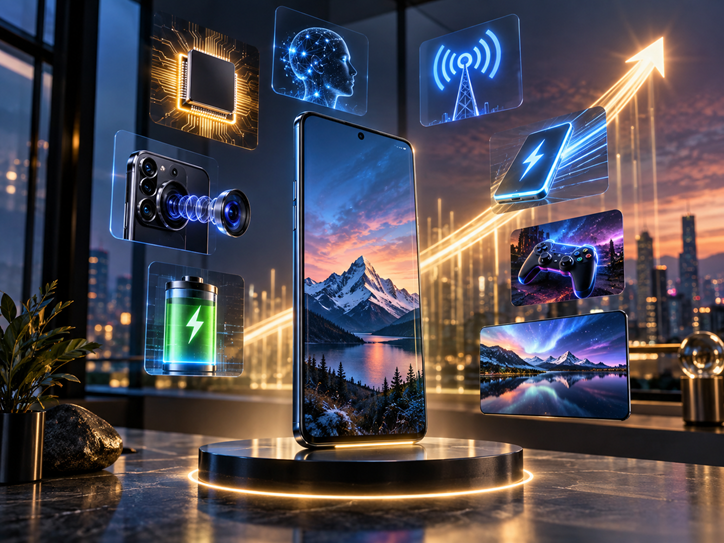
The increase in smartphone prices tells an important story.
Phones are no longer simple communication tools.
They have become:
- Cameras
- Work tools
- Entertainment devices
- Navigation systems
- AI assistants
- Learning devices
- Payment tools
- Business tools
As a result, they contain more advanced technology than ever before.
That technology has a cost.
Conclusion
Smartphone prices are increasing because modern phones are far more advanced than older ones.
The rising price is driven by factors such as:
- Powerful processors
- AI capabilities
- Better cameras
- Advanced displays
- 5G connectivity
- Larger storage and RAM
- Improved build quality
- Better charging technology
- Longer software support
- Research and development
- Import and logistics costs
While some pricing is also influenced by branding and market strategy, a large part of the increase reflects the growing complexity of modern smartphones.
The key for buyers is not simply asking:
“Why are phones expensive?”
But also asking:
“Which of these features do I actually need?”
At Cyberhub ICT, we believe smart technology decisions begin with understanding the technology itself.
When you understand what is inside modern phones, it becomes easier to choose wisely and spend better.
About Cyberhub ICT
Cyberhub ICT Center provides ICT training and technology services including:
- Desktop Publishing
- Digital Marketing
- Web Design & Blogging
- Internet & Cyber Security
- Graphics Design
- Social Media Management
- Content Creation
- Forex Trading Training
For more practical technology tutorials, product guides and digital-skills content, follow Cyberhub ICT.
Website: cyberhubict.online
Email: cyberhubict@gmail.com
Phone: 08061601662
Frequently Asked Questions
Why are smartphones getting more expensive?
Smartphones are becoming more expensive because they now include more advanced technology such as better processors, improved cameras, AI features, 5G connectivity, larger memory, stronger displays and more sophisticated software support.
Are expensive smartphones always better?
Not always. Expensive smartphones often include premium features, but the best device depends on your needs and budget.
Why do cameras increase the price of phones?
Modern smartphone cameras often include multiple lenses, larger sensors, optical stabilization and heavy software processing. These technologies add to production cost.
Does 5G make smartphones more expensive?
Yes, 5G support can increase price because it requires more advanced modems, antenna systems and engineering.
Why are phones expensive in Nigeria?
Apart from the technology inside the phone, local prices may be affected by exchange rates, import costs, shipping costs, customs charges and inflation.
Is a mid-range smartphone still worth buying?
Yes. Many mid-range devices now offer very strong performance and useful features at a lower price than flagship phones.
Should I upgrade my phone every year?
Not necessarily. If your current phone still performs well and meets your needs, you may not need to upgrade every year.
SEO INFORMATION
SEO Title: Why Smartphone Prices Are Increasing: The Technology Behind Modern Phones
Meta Description: Discover why smartphone prices are increasing and learn the technology behind modern phones, including processors, cameras, AI features, displays, 5G and more.
Suggested URL Slug:why-smartphone-prices-are-increasing
Focus Keyphrase:
Why smartphone prices are increasing
Secondary Keywords:
smartphone prices, why phones are expensive, modern phone technology, phone price increase, smartphone cost reasons, expensive smartphones, smartphone features
Suggested Categories:
Smartphones, Technology, Buying Guide, Mobile Tech
Suggested Tags:
Smartphones, Phone Prices, Mobile Technology, Android, iPhone, Tech Trends, Buying Guide, Cyberhub ICT
Featured Image Alt Text:
Why smartphone prices are increasing – the technology behind modern phones – Cyberhub ICT
