
Has your iPhone become frustratingly slow?
Apps take longer to open, websites load sluggishly, animations stutter, and battery life seems worse than ever. The good news is that you don’t necessarily need a new iPhone.
In many cases, a slow iPhone can be fixed with a few simple adjustments and maintenance steps.
This guide covers the most effective ways to speed up your iPhone and restore smooth performance.
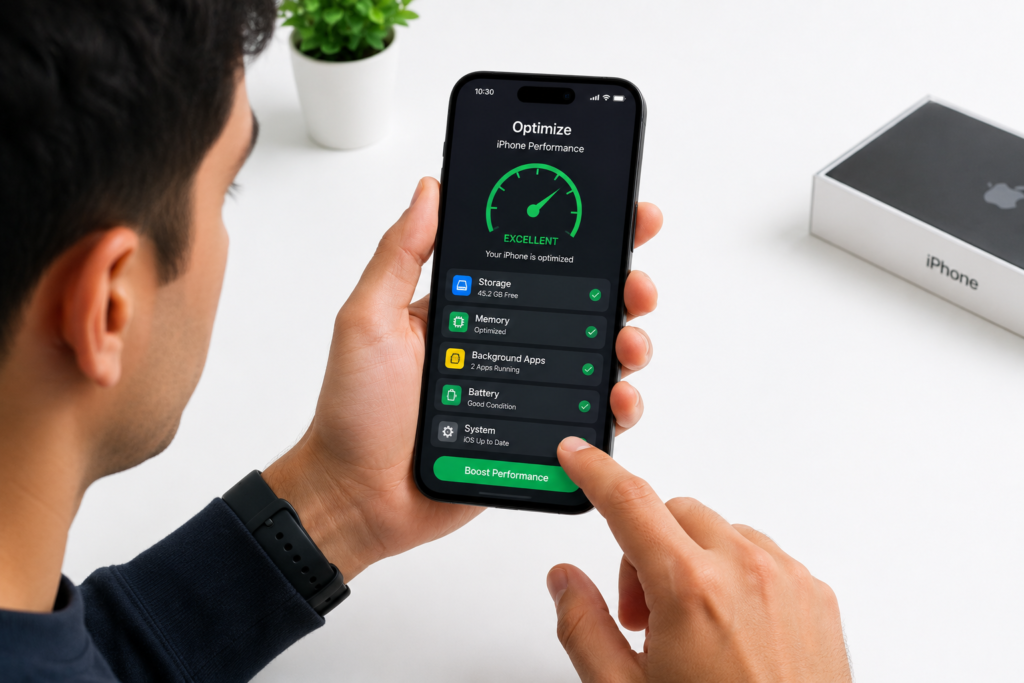
Why iPhones Slow Down Over Time
Several factors can affect iPhone performance:
- Low available storage
- Too many background apps
- Outdated iOS software
- Aging battery health
- Excessive cached data
- Resource-heavy applications
- Poor internet connectivity
Understanding the cause helps identify the best solution.
1. Restart Your iPhone
One of the quickest fixes is a simple restart.
Restarting:
- Clears temporary memory
- Stops background processes
- Refreshes system resources
How to Restart
- Press and hold the Power Button and Volume Button
- Slide to power off
- Wait 30 seconds
- Turn the iPhone back on
Many performance issues disappear immediately after restarting.
2. Check Available Storage
Low storage is one of the biggest causes of poor performance.
Check Storage
- Open Settings
- Tap General
- Select iPhone Storage
Aim to keep at least 10–20% of your storage free.
Delete:
- Unused apps
- Large videos
- Duplicate photos
- Downloaded files
- Old documents
3. Update iOS
Apple regularly releases updates that improve:
- Performance
- Security
- Battery efficiency
- Bug fixes
Update Your iPhone
- Open Settings
- Tap General
- Select Software Update
- Install available updates
Running the latest version of iOS often improves speed significantly.
4. Close Unnecessary Background Apps
Although iOS manages apps efficiently, certain applications may consume excessive resources.
To Close Apps
- Swipe up from the bottom
- Pause in the center
- Swipe unwanted apps upward
Focus on apps that frequently use location services, GPS, or streaming.
5. Disable Background App Refresh
Many apps constantly update in the background.
Disable It
- Settings
- General
- Background App Refresh
Turn it off entirely or limit it to important apps.
Benefits include:
- Faster performance
- Better battery life
- Reduced data usage
6. Clear Safari Data
Safari stores cache and browsing data over time.
Clear Safari Cache
- Settings
- Safari
- Clear History and Website Data
This can noticeably improve browsing speed.
7. Remove Unused Apps
Many users have dozens of apps they never use.
Offload Unused Apps
- Settings
- General
- iPhone Storage
- Enable Offload Unused Apps
The app is removed while preserving user data.
8. Check Battery Health
A degraded battery can force the iPhone to reduce performance.
Check Battery Health
- Settings
- Battery
- Battery Health & Charging
If Maximum Capacity is below 80%, battery replacement may significantly improve performance.
9. Reduce Motion Effects
Fancy animations consume resources.
Disable Motion Effects
- Settings
- Accessibility
- Motion
- Enable Reduce Motion
This can make the phone feel faster instantly.
10. Turn Off Automatic Downloads
Automatic downloads may consume processing power and internet bandwidth.
Disable
- Settings
- App Store
Turn off:
- App Downloads
- App Updates
- Automatic Downloads
You can update manually when convenient.
11. Remove Old Widgets
Widgets update frequently and consume system resources.
Review Widgets
- Remove unused widgets
- Keep only essential information visible
This reduces background activity.
12. Limit Location Services
Some apps constantly track location.
Manage Location Access
- Settings
- Privacy & Security
- Location Services
Set unnecessary apps to:
- Never
- While Using the App
This improves both speed and battery life.
13. Free Up RAM Quickly

A quick trick many users don’t know:
Force System Refresh
- Open App Switcher
- Close resource-heavy apps
- Restart the device
This clears temporary memory usage.
14. Reset All Settings
If performance issues persist, reset settings without deleting personal data.
Reset Settings
- Settings
- General
- Transfer or Reset iPhone
- Reset
- Reset All Settings
This restores system settings while preserving files and apps.
15. Factory Reset as a Last Resort
If your iPhone remains slow despite trying everything else, a clean reset may help.
Before Resetting
- Back up photos
- Back up contacts
- Back up documents
Reset
- Settings
- General
- Transfer or Reset iPhone
- Erase All Content and Settings
A fresh installation often restores original performance.
Signs You May Need a New iPhone
Consider upgrading if:
- Battery health is severely degraded
- Storage is permanently full
- Apps frequently crash
- iOS updates are no longer supported
- Hardware performance no longer meets your needs
Quick Speed-Up Checklist
| Fix | Performance Impact |
|---|---|
| Restart Device | High |
| Free Storage | Very High |
| Update iOS | High |
| Clear Safari Cache | Medium |
| Reduce Motion | Medium |
| Disable Background Refresh | High |
| Remove Unused Apps | High |
| Check Battery Health | Very High |
| Limit Widgets | Medium |
| Reset Settings | High |
Frequently Asked Questions (FAQ)
Why is my iPhone suddenly slow?
Low storage, outdated software, battery degradation, or excessive background activity are common causes.
Does clearing cache speed up an iPhone?
Yes. Clearing Safari cache and unnecessary data can improve responsiveness.
How much free storage should an iPhone have?
Keeping at least 10–20% free storage helps maintain smooth performance.
Can a bad battery slow down an iPhone?
Yes. Apple may reduce performance when battery health declines significantly.
Is factory resetting safe?
Yes, provided you back up your important files beforehand.
Conclusion
A slow iPhone doesn’t always mean it’s time to buy a new one. In many cases, freeing up storage, updating iOS, optimizing settings, and maintaining battery health can dramatically improve performance.
By following these proven fixes, you can make your iPhone faster, smoother, and more enjoyable to use without spending money on a replacement device.
Links you can visit:
